The Jeopardy! Experience
1. Why?
Lynn read, well—everything. Reading for her was like breathing; she was never without a book. When we first met in 1974 at the University of Delaware, Lynn was reading through the entire works of Anthony Trollope, a mid-nineteenth-century writer with nearly 50 volumes. At the same time, Lynn was doing her undergraduate work (a double major in history and political science), writing Star Trek stories in a new phenomenon called fan-fic, keeping up with the strategies of the Flyers’ third and fourth-line match-ups, and putting up with a skinny, weird, hairy guy who kept hanging around. Other writers she “read through” over the years were Kathleen Norris, Catherine Cookson, Miss Read, Lucy Maud Montgomery (she especially loved her journals and letters), Samuel Delaney, C. J. Cherryh, Ursula K. Le Guin, Willa Cather, James Tiptree, Jr. (Alice Sheldon)—I’m sure I’m missing many. (For fun, Google some of the above writers to see the volume of work each produced.) She also had favorite books she’d reread over and over: McTeague by Frank Norris, 1000 Acres by Jane Smiley, The Good Soldier by Ford Maddox Ford, and anthologies of essays and short stories, like Gardner Dozois’s Year’s Best Science Fiction (many volumes) which conveniently came out every year just before we’d head to the beach for a week’s vacation, a 700-1000 page paperback tome she’d read on the beach, and of course would finish on the second or third day.
I discovered she was reading the complete works of authors when she’d set a book down and say, “Wow, that was good. I wish there were more.” When I’d ask if we should go to Borders and get another book by them, Lynn would sigh and say, “I’ve read them all now; there are no more.” It’s too simplistic to say she was living out her online persona of “escapee” by losing herself in books, though that was part of it; reading offered her a respite like the beach did for that one precious week each summer. But she was more complicated than that. Lynn was grounded in reality, devoured books, and only sought to escape her troubled past.
When we’re little, we all annoy the adults around us with, “Why?” It starts as a question but soon becomes an impish demand to every response: “Why? Why!” Lynn read to answer those “whys” with the seriousness of an adult and the playfulness and curiosity of a child.
There were connections to the “whys” in everything Lynn read, threads that ran from each book to every other book. And inside each author’s work were hundreds of threads weaving together hundreds of different “whys,” for we all learned as children that one “why” leads to another and another and another. She was reading to make some final connection, to tie it all together. It was more than just a search for knowledge.
I think what made Lynn special was her ability to keep track of those millions of interwoven threads. If you think of any word, like “caviar,” she could follow the hundreds of “whys” and tell you things you may have never heard of. She’d tell you about the history of the world’s once largest caviar industry in Bay Side, New Jersey, at one time the caviar capital of the world (in South Jersey? Did you know that??). Or how chefs use spherification to create things like coffee “caviar.” Or the damaging results of over-fishing in the global caviar industry, or how poor her great grandfather was as an oyster shucker on the Eastern Shore. Think of a few words, and then think how many threads lead from each one to all kinds of books and stories: silk, nuns, Gandhi, baseball—anything. She could somehow keep track of all those threads, mentally follow where they led, and recall it all instantly.
Instantly is the key when we’re talking about Jeopardy!.
Lynn was the person you wanted on a long car trip. How else would I have ever found out about the Great Molasses Flood of 1919 in Boston? (I know, right?)
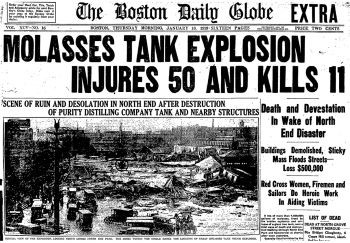
That’s the Lynn who was on Jeopardy! in 1992. When people would ask, “How do you remember all that trivia?” she’d quickly correct them with, “It’s general knowledge, not trivia. Trivia is Nixon’s shoe size; Jeopardy! clues deal with things everyone should know, or have probably heard at least once, like where Nixon was born.1 Jeopardy! players," she's say, "can just spin the circular filing cabinet a little faster.”